The Scrapyard of Bureaucracy
When I was thirteen, spending my weekends at the local electronics dump in Rural Wisconsin, I learned that a machine is only useful if it's running. A motherboard sitting in a bin of rainwater isn't a computer; it's a paperweight. In modern law enforcement, we have a similar problem. We have officers—the most sophisticated "processors" in the justice system—spending more time typing than they do policing. This is the Administrative Burden, a systemic failure that costs agencies millions of patrol hours every year.
An Incident Report is the bridge between a crime and a conviction. It is the record of what happened, when it happened, and who was involved. But the process of creating that record is often archaic. An officer might spend four hours on a complex scene and then another five hours in front of a clunky mobile data terminal, trying to remember every detail while being interrupted by new calls. This is where Incident Report AI changes the logic of the department. By automating the transition from raw field data to structured reports, we are effectively "fixing the motherboard" of forensic documentation.
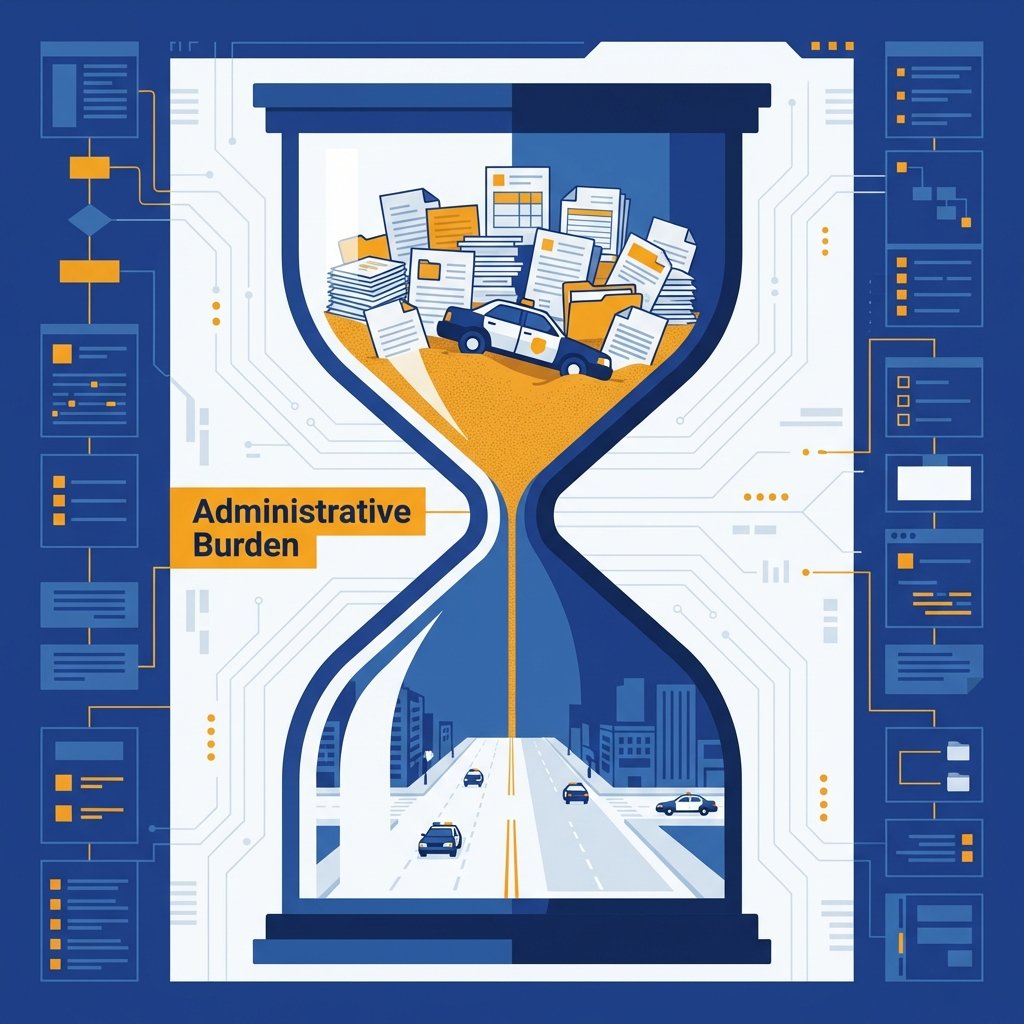
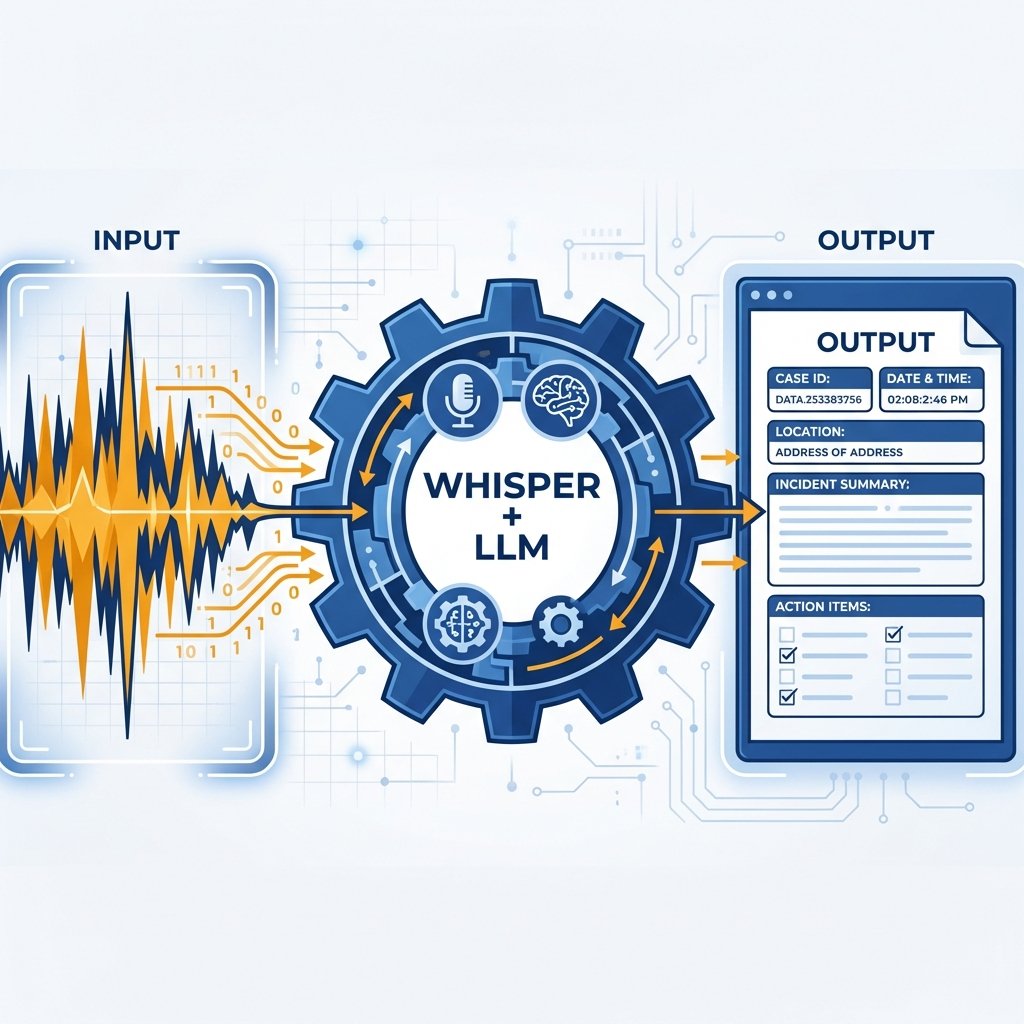
My high-functioning autism allows me to see disorganized data for what it is: a short circuit in the system. I "feel" the entropy of a spreadsheet that doesn't align or a narrative that skips steps. By leveraging Large Language Models, we can ingest Body-Cam Audio, Radio Traffic, and rapid Voice Memos as the "In," and produce high-authority, objective Police Reports as the "Out." We are moving from Manual Transcription to Intelligent Synthesis.
Tactical Insight: The Whisper Protocol
The foundation of high-accuracy reporting is the transcription engine. In the 2026 landscape, the industry standard is Whisper. Whisper is a state-of-the-art open-source transcription model that excels at understanding technical jargon, regional accents, and noisy environments—precisely the conditions of an active crime scene.
By deploying Whisper on Local GPU Clusters, agencies can achieve near-real-time Speech-to-Text without sending sensitive witness statements to a third-party cloud. This is the first step in the Synthesis Protocol: converting the ephemeral audio of a chaotic interaction into the steady state of a searchable text file.
The Architecture of a Structured Report
A pile of transcribed text is not a report; it is just a log. To be useful for prosecution, a report must be structured. This means the AI must go beyond simple dictation and perform Entity Extraction and Chronological Mapping. A Structured Report must include specific fields: Subject, Date, Incident Type, a clear Narrative, and actionable Action Items.
We use Mega-Prompts to instruct the LLM on how to fill a specific Template. The AI looks at the raw transcript and identifies the "Who" (Suspects, Victims, Witnesses), the "What" (Evidence, Actions, Statements), and the "Where" (Coordinates, Addresses). It then organizes these into the agency's mandated format, ensuring that every Constitutional Requirement for documentation is met.
This process often utilizes Zero-Shot Summarization. Because modern models have been trained on millions of pages of legal and bureaucratic text, they can often generate a high-quality summary without needing specific training for every individual report type. They understand the "Vibe" of a police report—objective, clinical, and detailed—right out of the box.
Managing the Record: OCR and Paper Legacy
Not all data comes from audio. Law enforcement is still haunted by the "Paper Wall." Decades of historical records, search warrants, and old incident logs sit in physical filing cabinets or scanned PDFs. To bring this data into the 2026 intelligence loop, we use OCR (Optical Character Recognition).
OCR allows the machine to "read" images of text, converting them into digital strings that the AI can then analyze. Once a stack of old reports has been pushed through the OCR engine, we can use the LLM to identify Inconsistencies across multiple years of data. We can find where a suspect gave three different birthdates or where a vehicle description changed between 2022 and 2025. We are turning a static archive into a dynamic intelligence asset.
This is the "Logos" of restoration. Just as I would clean the corrosion off a scavenged CPU socket to restore the connection, OCR and AI synthesis clean the "bureaucratic corrosion" off our historical records, allowing the Truth to flow again.
The Human Anchor: Verification and Sign-Off
Let me be absolutely clear: AI is the tool, but the Officer is the Author. In the legal system, an AI-generated text is never the final word. Every report produced by these systems must be reviewed and signed off by the reporting officer. The AI provides the first draft—the high-fidelity Inference—but the human provides the Rural Minnesotal Authority and Legal Liability.
If the AI makes an error in the narrative or misses a piece of evidence, the officer must correct it. We are not replacing the officer's judgment; we are Cognitively Offloading the tedious act of typing. This allows the officer to focus on the Quality of the Witness rather than the Quantity of the Words. By the grace of God, we are using the machine to empower the person, not to automate the soul out of the work.
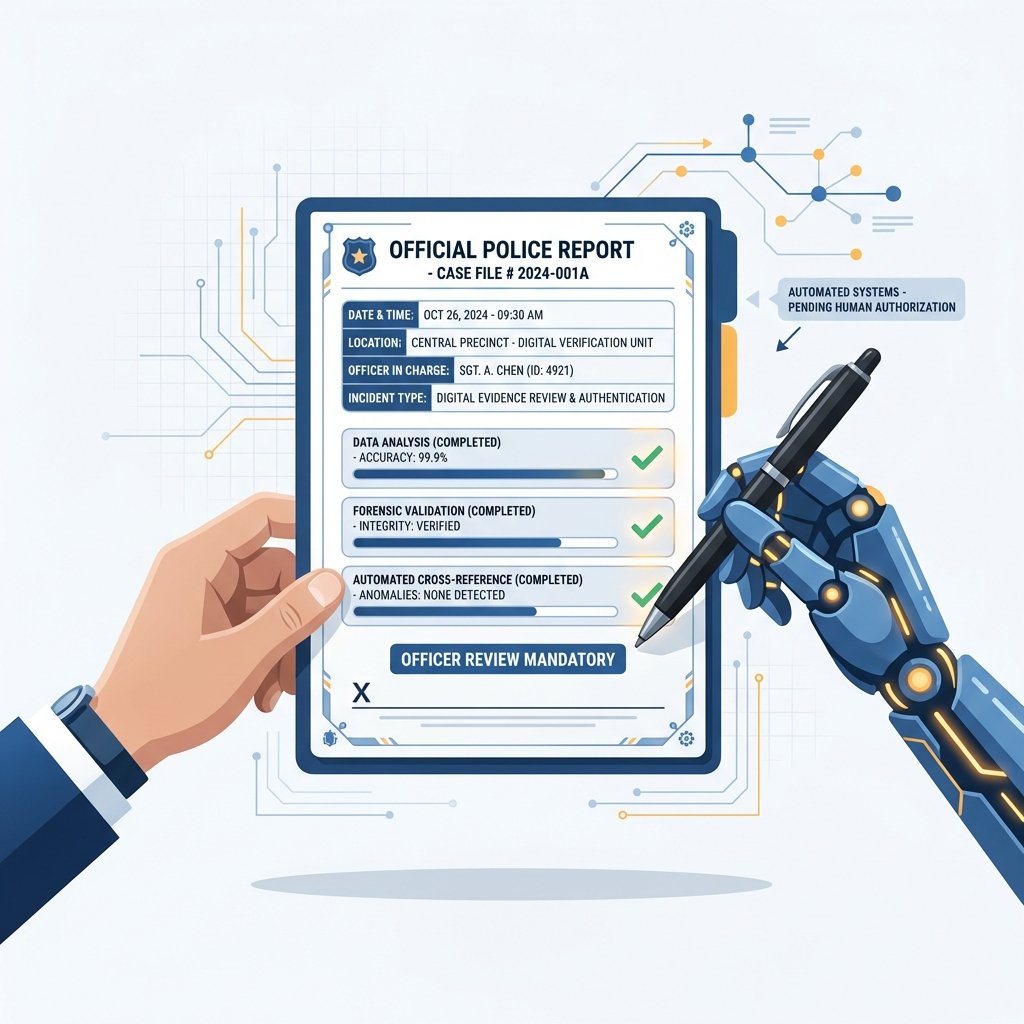
This is a core pillar of AI Sovereignty. We own the output because we verify the output. We use the AI to reach Human Excellence faster, but we never let the machine drive the squad car. The Stewardship of the Record is a sacred duty that belongs to the man or woman behind the badge.
Sovereign Privacy: PII Scrubbing
In a world of public records and FOIA requests, privacy is a battleground. One of the most vital tasks for a reporting AI is PII Scrubbing. This is the automatic redaction of sensitive personal information—Social Security numbers, victim home addresses, and juvenile identities—before a report is entered into a public-facing database.
By using Private AI Models, we can perform this scrubbing locally. The AI identifies the patterns of Personally Identifiable Information and replaces them with standard placeholders (e.g., [REDACTED]). This ensures that we are serving the public's right to know while also serving the Constitutional Right to Privacy for the individuals involved.
Cross-Referencing: Finding the Hidden Fractures
The true power of AI reporting isn't just in writing one report; it's in analyzing thousands. Because the AI views every report as a collection of Vectors in a Latent Space, it can identify Inconsistencies that a human reader would never catch.
If Witness A's statement in a report from Tuesday contradicts Witness B's statement in a report from six months ago, the AI can flag that Logical Conflict for the investigator. It can find where the same weapon description appears in three different robberies across two precincts. We are using the AI as a Pattern Recognition engine that works across the entire record of the agency.
This mirrors how I used to troubleshoot clunky code. I would search for the one line that didn't align with the rest of the logic. In law enforcement, the AI is the Debugger for the Narrative. It finds the "bugs" in the stories people tell, allowing the investigator to follow the path of Objective Truth.
The Mission: Back to the Streets
As a follower of Jesus Christ, I value the stewardship of time. We are only given so many hours on this earth. To see a talented, highly trained officer sitting in a patrol car behind a screen for six hours a day is a tragedy of wasted potential. The goal of AI-assisted reporting is simple: To get officers back on the street faster.
We want our protectors to be present in the community, building relationships, deterring crime, and serving the vulnerable. Every minute saved on paperwork is a minute gained for Public Safety. This isn't just "efficiency"; it's a Rural Minnesotal Obligation to use the tools we've been given to serve the greatest number of people with the highest degree of Integrity.
My journey from the electronics bins in Rural Wisconsin to the front front lines of AI Mastery has been guided by the grace of God. I see the potential for these tools to move us closer to a society where Truth is preserved, Privacy is respected, and the Administrative Burden no longer stands in the way of Justice.
Master the synthesis. Own the record. Rule the machine. Your community is waiting for its officers to come back to the streets. Let the AI handle the typing; you handle the Truth.