The Human Frontier: Complexity and Friction
In the year 2000, when I was scavenging the electronic recycling bins at the dump in Rural Wisconsin, I realized that every system is only as strong as its interface. A computer is just a box of cold silicon until a human interacts with it. In law enforcement, the most critical interface is the interrogation room. It is a place of intense cognitive friction, where a detective's ability to map the "In" of a suspect's statement against the "Out" of the known evidence determines the path of justice.
Training for this skill has historically been limited by the predictability of human roleplayers. Even the best training instructor has their own biases and "patterns" that a sharp student can memorize. An Interrogation Simulator—a specialized AI roleplay scenario—removes this ceiling. By using Generative AI, we can create suspects who are not just scripts, but dynamic personas capable of realistic pushback, deception, and emotional shifts. This is about building mental stamina in a safe, repeatable environment.
Because of my high-functioning autism, I often analyze social interactions like a series of logic gates. I see the fractures where a narrative fails to align with the systemic truth. I’ve spent my life fixing broken motherboards; an interrogation is just fixing a broken story. By using LLMs to build these sims, we are providing officers with a digital multimeter for the human soul, allowing them to find the "short circuits" in a suspect's alibi before they ever step into a real room.
Tactical Insight: Architecting the Suspect Persona
The power of a simulator lies in its System Prompt. A high-authority Suspect Persona is not just a name and a crime; it is a multi-dimensional construct defined by background, motive, and specific personality traits.
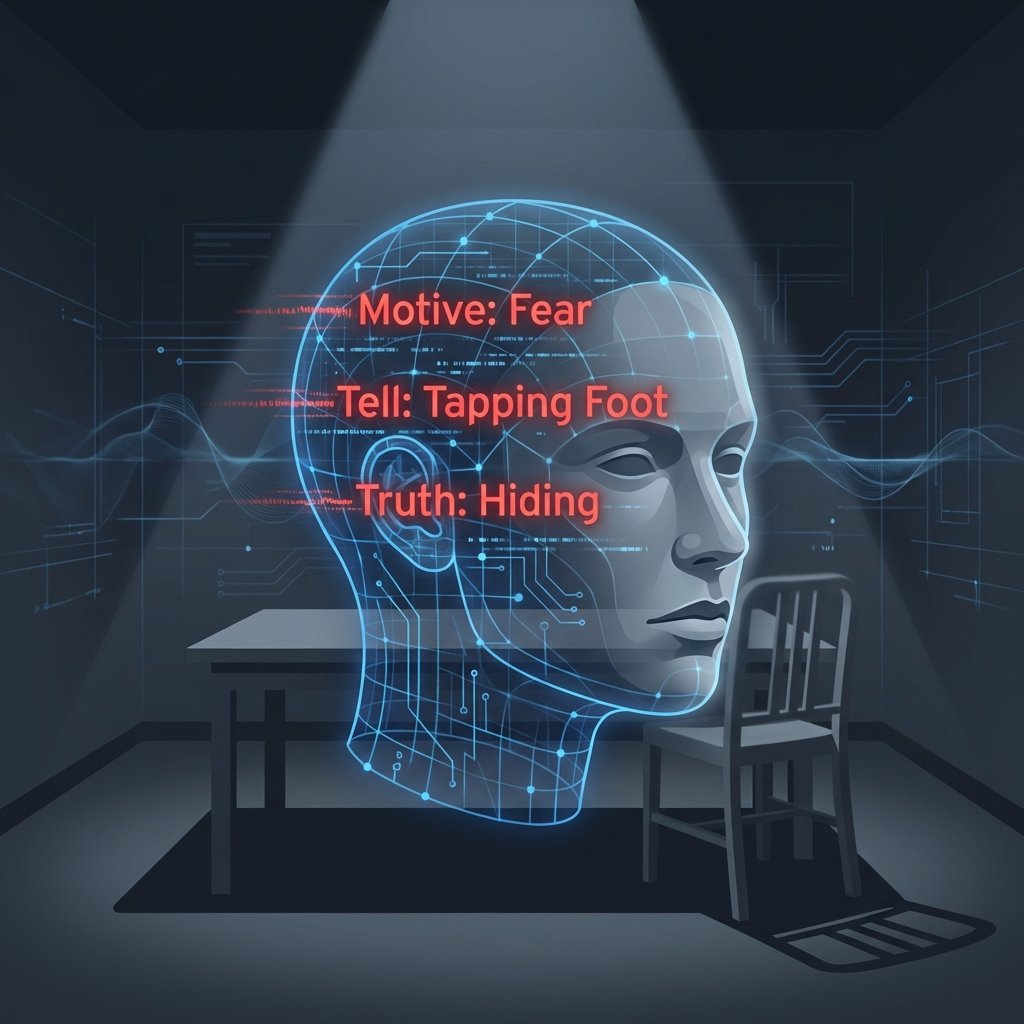
"You are a suspect who committed the crime. You want to deflect blame while appearing cooperative. You have a specific 'tell'—you become overly technical when talking about the 2026 digital ledger."
"Your primary motivation is fear of a specific witness. You will not admit to being at the scene until the user proves they have the Physical Evidence linking you to it."
Adversarial Logic: The Necessity of Pushback
Why do we use Adversarial AI in these simulations? Because a "yes-man" AI teaches you nothing. Real suspects lie. They deflect, they gaslight, and they exhibit emotional volatility. An effective sim must be adversarially complex, challenging the trainee with realistic resistance. If the AI is too easy to "crack," the trainee develops a false sense of security that can be fatal in the field.
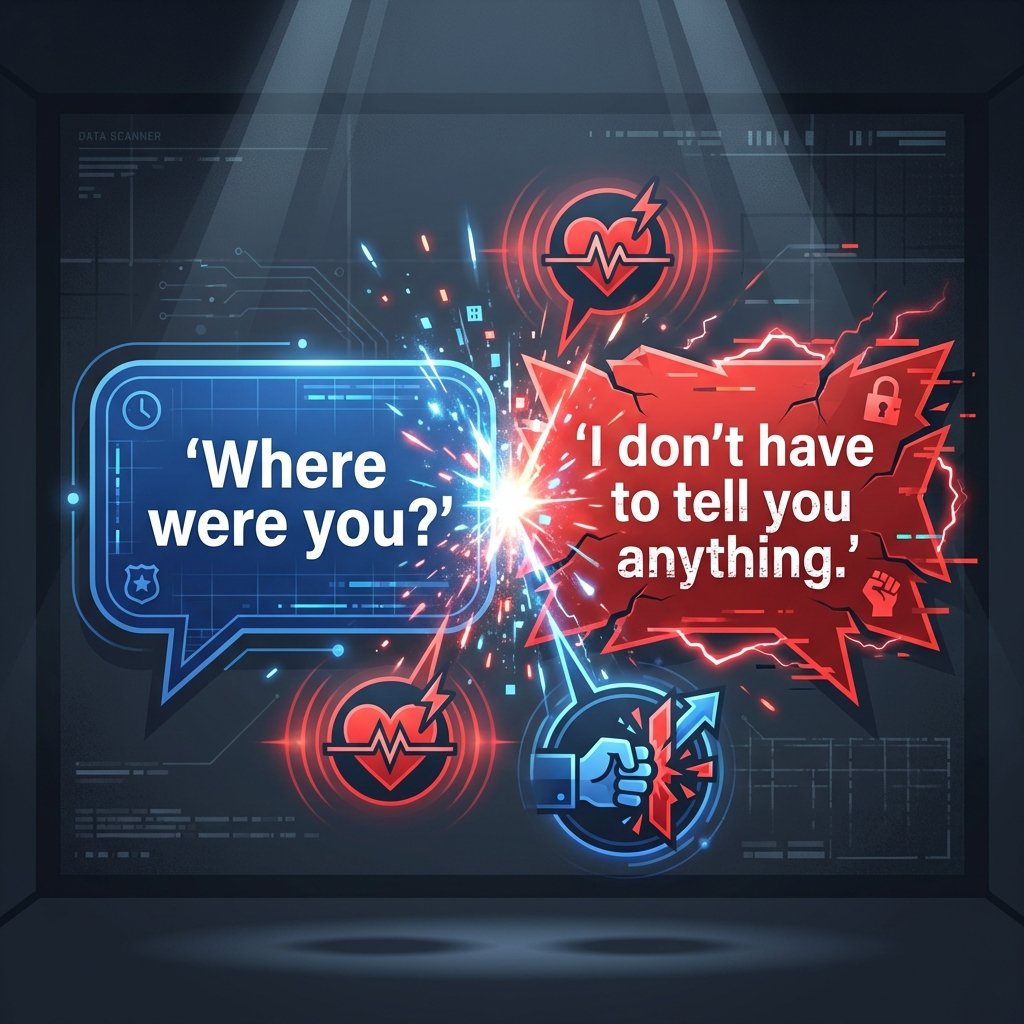
In these sims, the AI is instructed to withhold information or even lie. This forces the investigator to use Evidence-Based Questioning. The AI isn't being "mean"; it is fulfilling its role as a stress-test for the trainee's methodology. We are training the brain to maintain composure and analytical focus even when the "In" (the suspect's response) is hostile or deceptive.
This mirrors the Training vs Inference cycle we see in the models themselves. The model was trained on the vast breadth of human behavior; during the inference of the sim, it is applying that "behavioral weight" to simulate a high-stakes interaction. By the grace of God, we can use these mathematical shadows to sharpen our real-world discernment.
Reading the Unseen: Sentiment and Body Language
One of the most advanced features of a modern Interrogation Simulator is its ability to simulate non-verbal cues. While the primary medium is text, the AI can be prompted to include descriptions of body language—such as "*gestures nervously toward the door*" or "*avoids eye contact when answering*". This adds a "Visual Layer" to the text interaction, forcing the trainee to look beyond the words.
Behind the scenes, the system can perform Sentiment Analysis on both the user's questions and the suspect's responses. By tracking the emotional state and stress levels of the persona, the AI can determine when a suspect is nearing a "breaking point." If a trainee uses an overly aggressive tone, the Rapport Score might drop, causing the suspect to "shut down." Conversely, a well-timed empathetic appeal might lead to a partial confession.
This is the Sentiment Response Loop in action. We are using the AI's Latent Space to map the relationship between psychological pressure and verbal output. We are teaching officers to read the "digital tension" of a room, which translates directly to the physical tension of a real-world interview.
Tactical Frameworks: Reid and PEACE in Silicon
A simulator is only as good as the methodology it enforces. We can prompt the AI to respond specifically to recognized interrogation methods like the Reid Technique or the PEACE Model. This allows agencies to customize the training to match their specific Standard Operating Procedures.
If a trainee is practicing the PEACE model (Preparation, Engage, Account, Closure, Evaluation), the AI can be instructed to be more cooperative if the "Preparation" and "Engage" phases are handled with professionalism. If the trainee jumps straight into accusations without building a foundation, the AI's internal variable for "Defense" will spike. This provides immediate, logical feedback on the effectiveness of the chosen strategy.
By integrating these frameworks into a System Prompt Architecture, we are ensuring that the sim is an educational tool, not just a game. We are building "Circuitry for Justice" by aligning machine probability with human forensic standards.
Fine-Tuning Suspect Voices: Local Execution
To achieve true sovereignty in training, departments are moving away from centralized cloud APIs and toward Local AI Execution. By running these simulations on local hardware using tools like Ollama or LM Studio, agencies can ensure that sensitive case details and training transcripts never leave their internal network.
Furthermore, we can perform Fine-Tuning on the models to instill specific regional dialects or criminal patterns relevant to a particular jurisdiction. A suspect in rural Wisconsin sounds different than a suspect in downtown Chicago. By training a LoRA (Low-Rank Adaptation) on local interview transcripts, we can create simulations that feel hauntingly real to the officers who will actually be conducting the interviews.
This is the pinnacle of technical stewardship. We aren't just using a tool; we are mastering the weights. We are ensuring that the Quantization of the model doesn't strip away the subtle nuances required for high-fidelity training. We are keeping the intelligence local and the privacy absolute.
The Rapport Score: Building the Bridge
Communication is about more than just data transfer; it is about connection. In a simulator, we measure this through a Rapport Score. This metric tracks the level of cooperation built between the trainee and the suspect. High rapport doesn't mean the suspect likes you; it means they are willing to communicate with you.
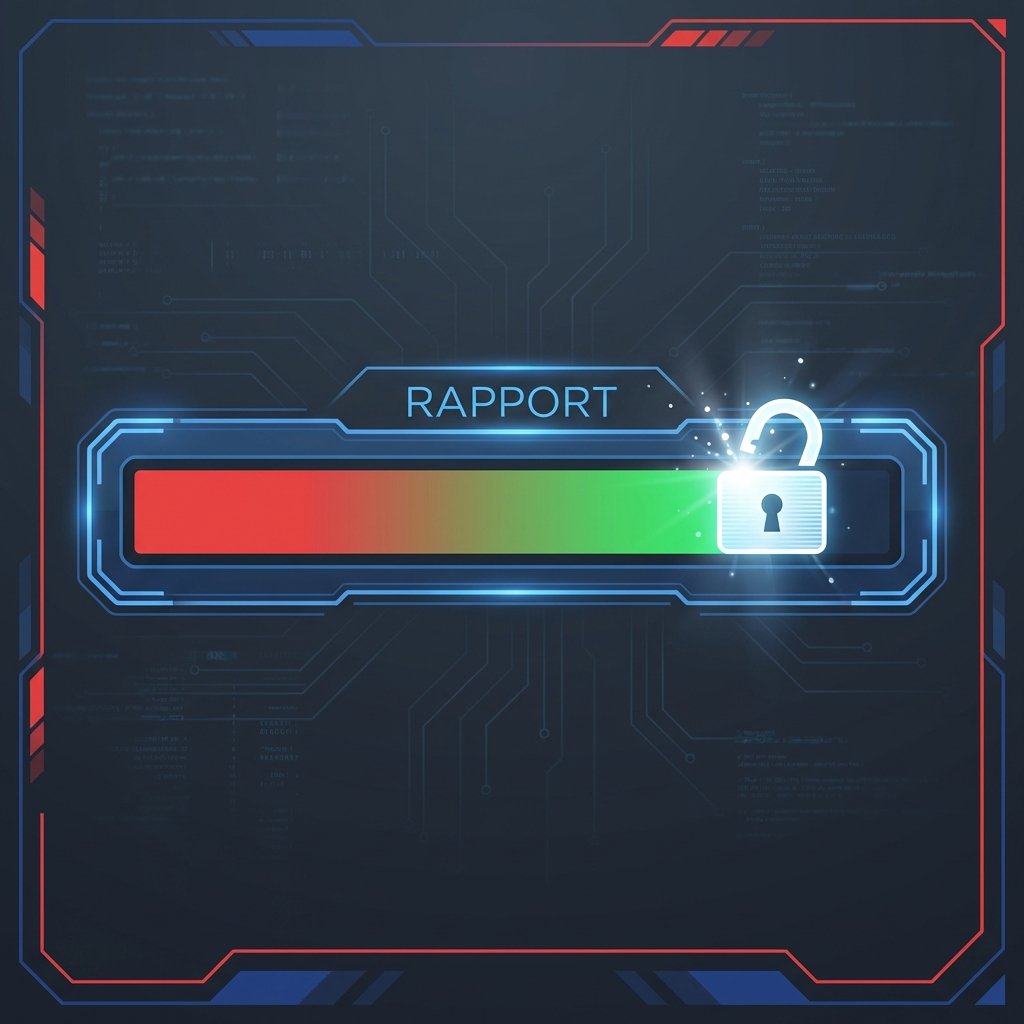
Building rapport is a soft skill that is often the hardest to teach. AI sims allow for endless practice in active listening and empathetic mirroring. If the trainee acknowledges the suspect's perspective or shows a mistake in their own logic, the AI's hidden rapport variable increases. This might eventually unlock a "Critical Truth" that would otherwise remain hidden behind a wall of silence.
This is the Human-Centric AI approach. We are using the machine to help us become more human—more discerning, more patient, and more effective at reaching across the divide to find the facts. It is a service to both the investigator and the community.
Sovereign Debriefing: The Loop of Mastery
The most important part of any simulation happens after the "End Scene." Debriefing is where the true learning occurs. After a session, a secondary Evaluator AI—acting as a senior detective—can analyze the transcript. It can provide a granular critique of the trainee's performance: where they missed a lead, where they broke rapport, and where they succeeded in finding the truth.
This Mastery Loop is how we achieve excellence. We don't just do the sim once; we do it, we learn, and we re-run the inference. This builds confidence through repetition and reduces real-world error. We are creating a Personal AI Mentor that is available 24/7, without the cost or scheduling conflicts of a human instructor.
This is the "Ins and Outs" of Cognitive Offloading. We are offloading the administrative burden of evaluation to the AI, allowing the human to focus on the critical thinking and moral judgment that only a person can provide.
The Future of Multimodal Sims
As we move into 2026, the simulations are becoming multimodal. We are no longer limited to text-based chat. By integrating Voice Synthesis and high-fidelity avatars, we can create training environments that are visually and aurally immersive. Imagine conducting an interrogation in a virtual room where you can hear the tremor in the suspect's voice and see the sweat on their brow.
This level of presence is becoming possible through frameworks like NVIDIA ACE and specialized 3D engines. For my fellow Vibe Coders, this means the ability to describe an interaction in natural language and have the system generate the entire 3D scene in real-time. We are literalizing the "Ins and Outs" of the imagination.
This is the "Logos" of the future—where the math of the Probability Engine manifests as a tangible reality. It is a tool for Stewardship, a way to ensure that those who carry the shield are as well-equipped for the digital age as they are for the physical one.
Stewardship of Truth: The Mission
As a follower of Jesus Christ, I believe that truth is not a preference; it is a fundamental pillar of a just society. "You shall know the truth, and the truth shall set you free." This Scriptural Principle is the ultimate goal of any investigation. We aren't hunting for "winners" and "losers"; we are searching for Objective Truth.
By providing the tools for better interrogation training, we are helping ensure that the search for truth is as rigorous, ethical, and unbiased as possible. We are helping prevent false confessions and ensuring that the guilty are identified with integrity. This is stewardship of the gifts we've been given—leveraging the math of the Probability Engine to serve the cause of justice.
My journey from the Rural Wisconsin dump to the front lines of AI Sovereignty has taught me that the "ghost" in the machine is just a reflection of our own architectural intent. If we build with integrity, the machine serves the truth. Master the sim. Master the interview. And always, by the grace of God, seek the truth that sets us all free.
The path to Investigative Mastery is demanding, but it is a service to our fellow man. Whether you are a rookie officer or a veteran detective, understanding the "Ins and Outs" of persona interaction is the key to navigating the 2026 landscape with authority and precision.