The Signal in the Noise
When I was a kid in Rural Wisconsin, scavenging the electronics dump, I became obsessed with the concept of "The Signal." I would stare at the static on an old CRT monitor, trying to find the hidden image buried beneath the snow. I realized early on that chaos is often just a pattern we haven't decoded yet. In the world of 2026 criminality, the "noise" is overwhelming. A police department might generate thousands of Incident Reports every month, each containing fragments of a larger story.
The goal of Pattern Recognition is to find the "Signal" within this noise. It is the art of identifying non-obvious relationships in massive amounts of crime data. A single burglary is a tragic event; a sequence of burglaries across three counties with the same unique entry method is a systemic pattern. traditionally, finding these links required human analysts to manually pore over spreadsheets and pin maps—a process that was slow, prone to error, and limited by the human capacity to remember details across thousands of files.
Because of my high-functioning autism, my brain is naturally wired for pattern detection. I see the "In" of a data set and can often intuit the "Out" before the processing is even finished. I see the world as a series of interconnected nodes. By using AI, we are giving law enforcement a Digital Multimeter for the entire city, allowing them to find the "short circuits" in the social fabric long before they spark into a major crisis.
Tactical Insight: The Vector Advantage
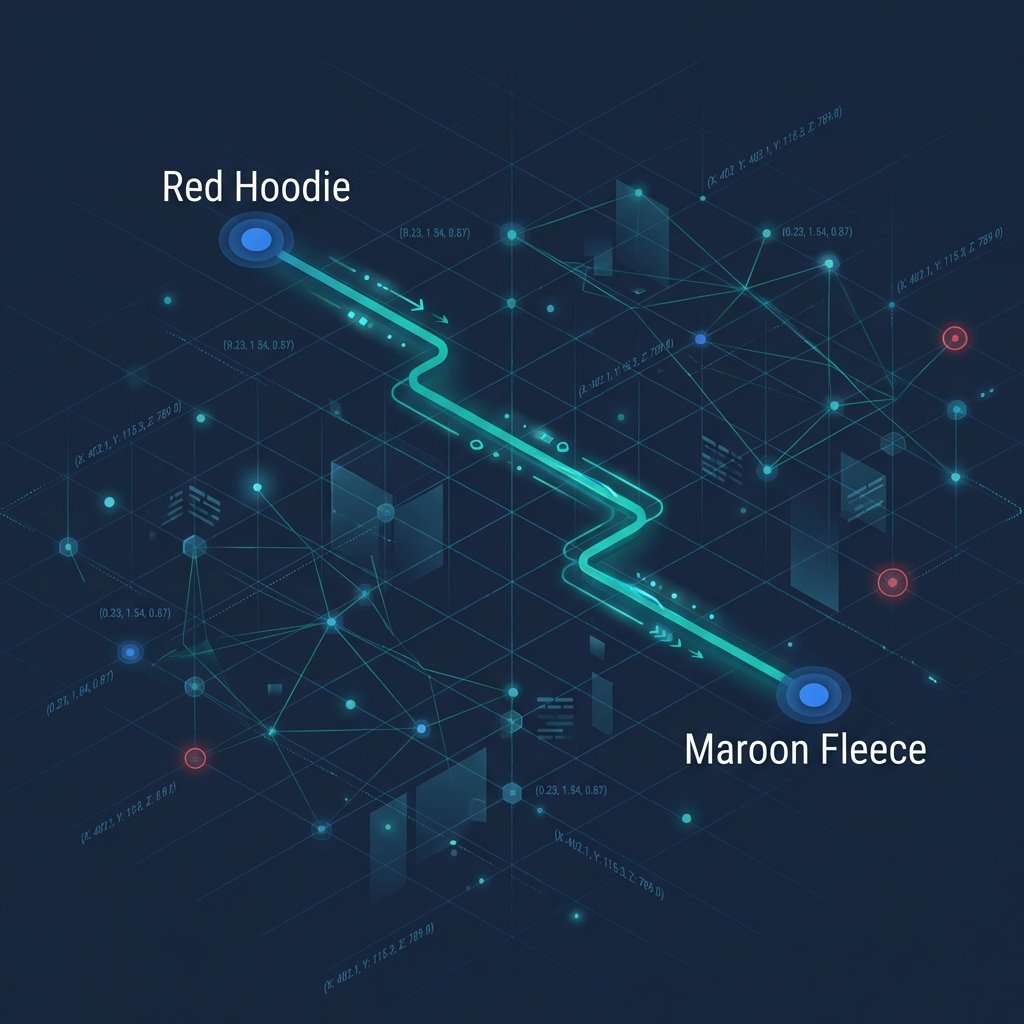
How does the machine "see" a pattern? It's not through keyword matching. It's through Semantic Relationships. By storing crime data in a Vector Database, the AI converts every report into a mathematical coordinate (a vector) in a high-dimensional space.
This allows for Semantic Matching. If one report describes a "man in a red hoodie using a crowbar," and another describes a "male suspect wearing maroon fleece prying a door frame," the AI recognizes that these events are "closer" in Latent Space than they are to a report about a shoplifter. The machine doesn't care if the words are different; it understands the Vectorized Intent. This is how we link crimes across different jurisdictions that use different reporting software or terminology.
Predictive Policing: Allocating the Shield
One of the most powerful—and debated—aspects of this technology is Predictive Policing. This isn't about arresting someone before they commit a crime; it's about using Historical Data to identify high-risk areas or times for certain activities. If the AI identifies a Temporal Cluster of thefts in a specific parking garage every Tuesday between 2 PM and 4 PM, the department can allocate its resources more effectively.
This is about Strategic Resource Allocation. In an era where many departments are understaffed, AI acts as a Force Multiplier. We aren't just reacting to the "Out" of a crime; we are analyzing the "In" of the environment to stay one step ahead. It's the difference between being a "Firefighter" (who only shows up when there's a blaze) and an "Electrician" (who fixes the wiring so the fire never starts).
However, we must be vigilant about the Garbage In, Garbage Out principle. If the historical data used to train the model is biased, the AI's "Predictions" will merely reinforce that Data Bias. We must ensure that our models are trained on objective, verified facts rather than subjective impressions. This is the Stewardship of the Weights—ensuring that the machine serves justice, not prejudice.
Anomaly Detection: Spotting the 'Weird'
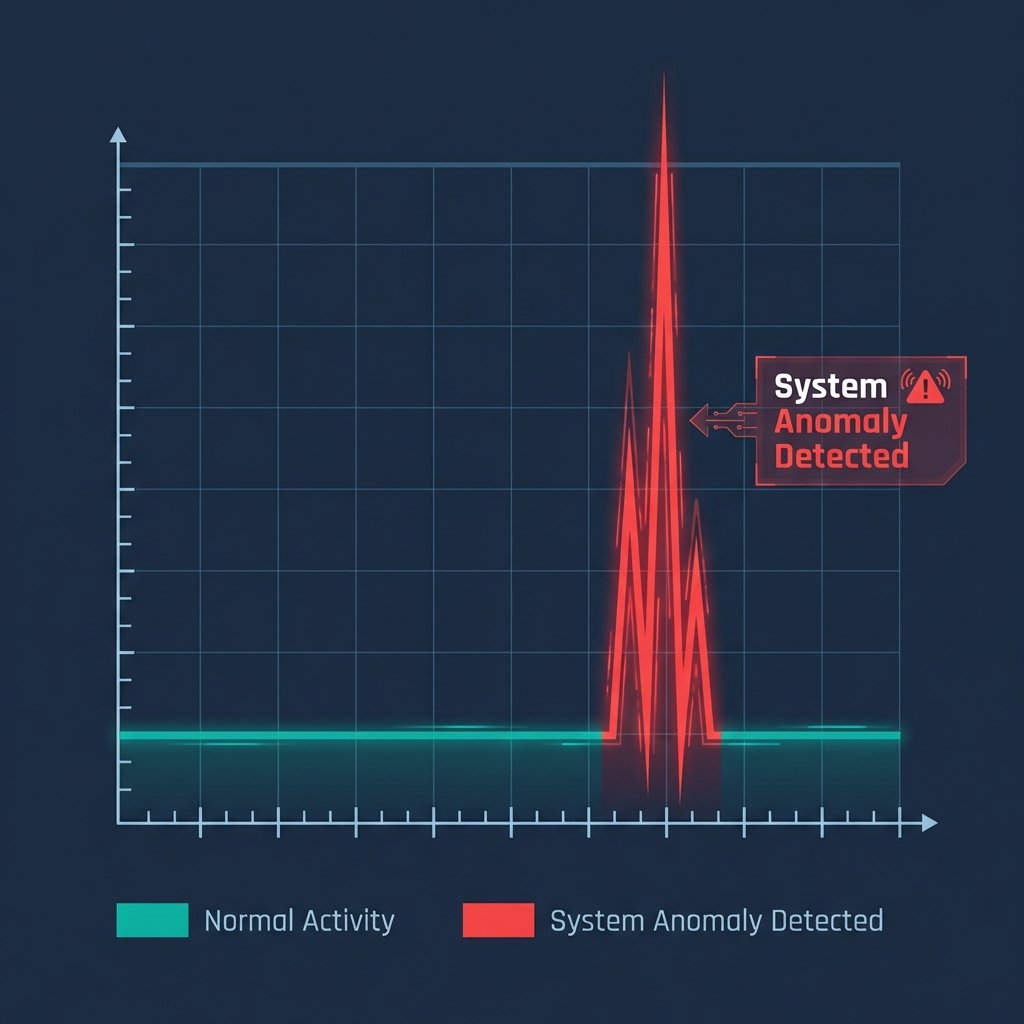
Patterns are useful, but departures from patterns are often more illuminating. Anomaly Detection is the process of identifying data points that are significantly different from the norm. In law enforcement, this is a critical tool for identifying Fraud, insurance scams, or the emergence of a new Modus Operandi (MO).
If a specific financial account suddenly exhibits a Spike in Transaction Velocity that doesn't align with its three-year history, the AI flags it as an anomaly. If a perpetrator who usually avoids physical contact suddenly becomes violent, the system notes the Behavioral Shift. We are using the AI to monitor the "Baseline" of a situation so we can instantly identify when something is "Off." As a repair tech, I knew a circuit was failing when it started drawing more current than the Architecture was designed for; anomaly detection is the current-draw monitor for society.
Social Network Analysis (SNA): Mapping the Influence
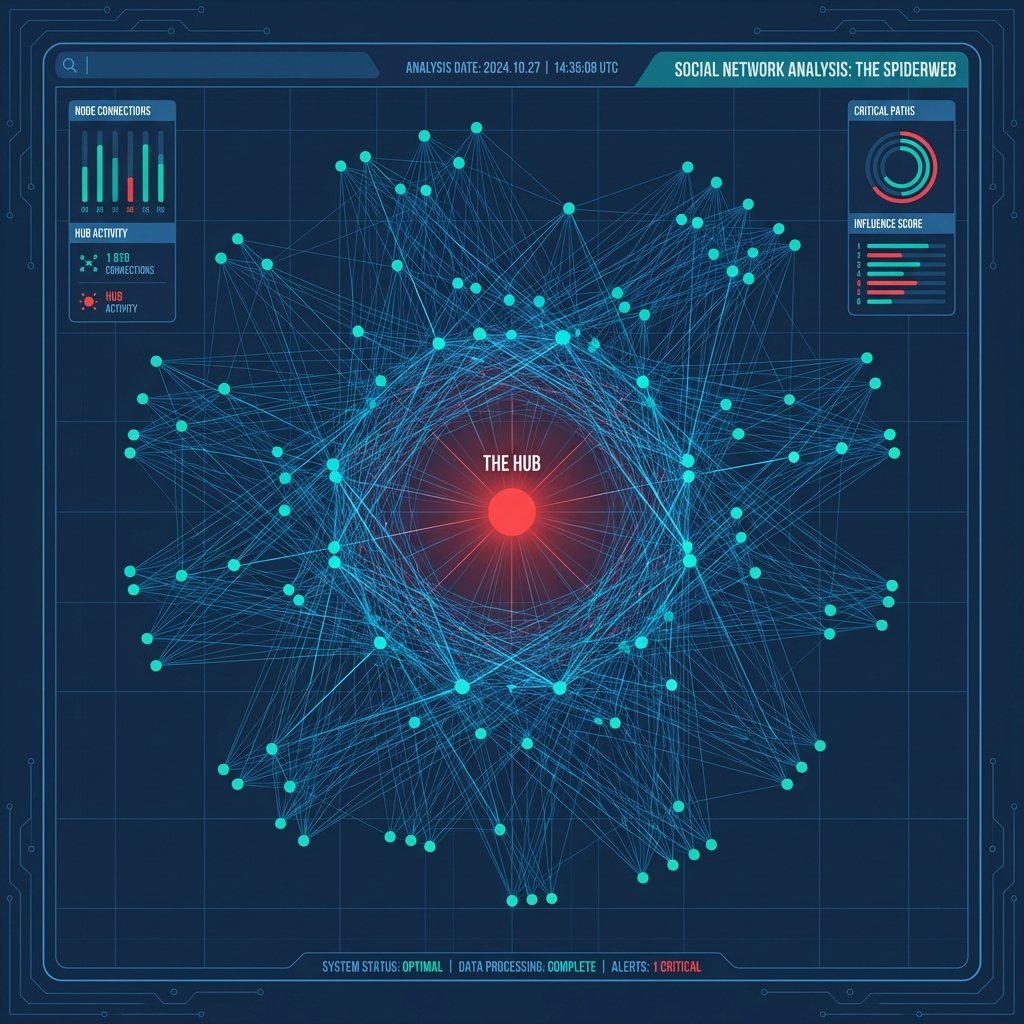
Crime is rarely a solo act. Most organized criminal activity is a web of relationships. Social Network Analysis (SNA) allows us to map these connections to find the center of a group. By analyzing communication logs, financial transfers, and co-arrest records, the AI can visualize an Influence Map.
This allows investigators to identify the "Hubs"—the individuals who may not be committing the physical acts but are coordinating the In-Flow of resources and the Out-Flow of illicit goods. Using Graph Theory, the AI can identify which nodes are most critical to the network's stability. If you remove a "Peripheral Node," the network survives; if you remove the "Hub," the entire system collapses. This is Sovereign Intelligence at its most surgical.
For deeper research on the mathematics of this, I highly recommend looking into the Stanford Social Network Analysis resources. We are literalizing the "Ins and Outs" of human association to serve the cause of Peace.
The Risk of Recidivism
One of the most challenging areas of analysis is predicting Recidivism Risk—the likelihood that a person will commit another crime after being released. AI models can analyze hundreds of factors, from employment history to social circles, to provide a Risk Score.
While this is a powerful tool for allocating Rehabilitative Resources, it must be handled with extreme care. The goal isn't to create a "permanent record" that prevents a person from ever changing; the goal is to identify who needs the most support to break the cycle. We are using the math of the Probability Engine to help people find a new path, not just to track their old one.
The Human Augmented: Verifying the Leads
Let me be clear: The AI is for Generating Leads, not for making the final decision. The Master in pattern recognition uses AI to identify clusters and anomalies, but then hands those findings to a Human Investigator for verification. The machine provides the "Candidate Pattern"; the human provides the Rural Minnesotal Context and Legal Verification.
We are entering an era of Augmented Investigation. The AI does the heavy lifting of Massive Data Ingestion, freeing the human to do the work of Critical Thinking. This is the "Ins and Outs" of Cognitive Offloading. We offload the data-crunching so we can focus on the Search for Truth.
This requires Low-Latency Processing. Real-time pattern recognition requires high-speed data ingestion and Massive Parallelism. When a call comes in, the system should be able to instantly cross-reference it against the entire database of active patterns. This is Tactical Awareness in the digital age.
Stewardship of the Peace
As a follower of Jesus Christ, I believe that we are called to be Peacemakers. "Blessed are the peacemakers: for they shall be called the children of God." - Matthew 5:9 Pattern recognition is a tool for Restoring the Peace. By identifying the systems of harm early, we can intervene with Compassion and Precision.
We aren't hunting for "points" on a scoreboard; we are hunting for Objective Truth to protect the weak and serve the community. My journey from the scrap heaps of Rural Wisconsin to the Front Lines of AI Sovereignty has taught me that technology is a gift to be used for the Glory of God and the Service of Man. Master the pattern. Protect the record. And always, by the grace of God, seek the truth that sets us free.
The patterns are there. The data is waiting. The duty is yours. Sovereignty is the reward for those who choose to understand.