The Sacred Trust of Healthcare Data
In the medical realm, data represents more than just strings of text or numerical values; it is the digital manifestation of a human life—a record of suffering, healing, and profound vulnerability. The Health Insurance Portability and Accountability Act (HIPAA) was established to safeguard this Protected Health Information (PHI), ensuring that patients can trust their practitioners with their most intimate secrets. However, as Artificial Intelligence disrupts traditional medical workflows, we face a critical juncture: how do we harness the power of Large Language Models without sacrificing the sanctity of the patient-doctor relationship?
The "In" of medical practice is the patient encounter—the moment of raw data collection. The "Out" should be healing and professional insight. But when a clinician unknowingly feeds that "In" into a Public AI interface, the perimeter is shattered. To understand the risks, one must look at the foundational architecture of AI. As explored in our module on What is an LLM?, these models are trained on vast datasets and continue to "learn" from user interactions unless strictly contained. Without a Business Associate Agreement (BAA), a standard consumer-grade AI like ChatGPT is essentially a Data Harvesting engine.
From my perspective as a systems engineer with a focus on Sovereign Tech, the primary risk isn't just a technical leak; it's a fundamental breakdown of Medical Stewardship. If you wouldn't leave a patient's physical file on a subway bench, you cannot justify leaving their digital twin in a cloud-hosted context window. The Fiduciary Duty of a physician requires the proactive construction of a Security Perimeter that treats data as a high-stakes asset.
The HIPAA-Compliant AI Stack
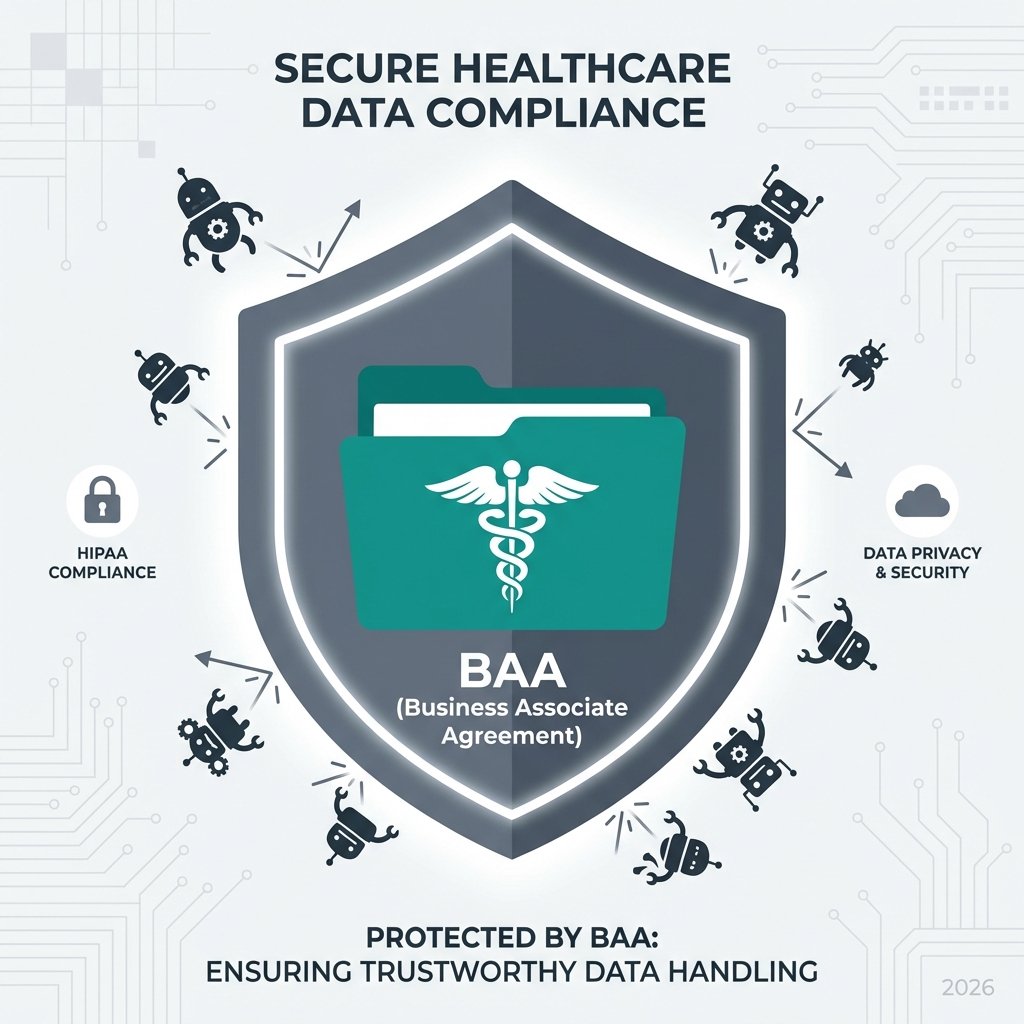
Many medical professionals ask: "Can I use AI in my clinic today?" The answer is a conditional yes, but it requires a shift from "Convenience-First" to "Sovereignty-First." A HIPAA-compliant implementation must address the shared liability established by a Business Associate Agreement (BAA). This legal contract mandates that the AI provider (the "Business Associate") adheres to strict data protection standards and assumes liability for any breaches.
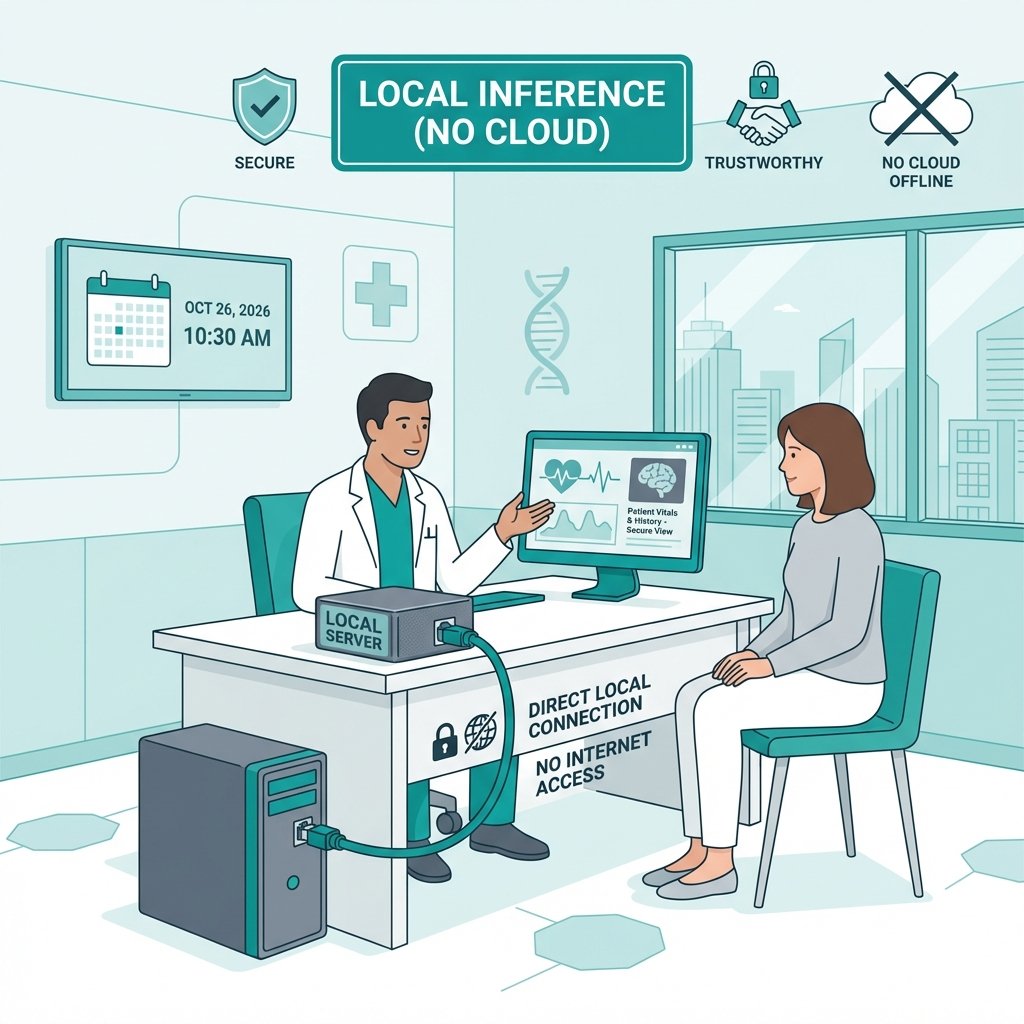
However, even with a BAA in place, Cloud-Based AI represents a centralized point of failure. The ideal state is Local Inference. By hosting models on local, air-gapped hardware, the clinic ensures that the Protected Health Information (PHI) never touches the public internet. This is the heart of Medical Sovereignty—the right of the patient and the doctor to own the intelligence that processes their data.
Consider the role of Training vs Inference. In a sovereign medical stack, the "Training" happens on massive, global datasets that are de-identified, while the "Inference" (the actual processing of your patient's data) happens within your local vault. This separation ensures that the AI's general intelligence is utilized without exposing the patient's specific identities to the training loops of Big Tech.
Tactical Blueprint: Medical AI Safety
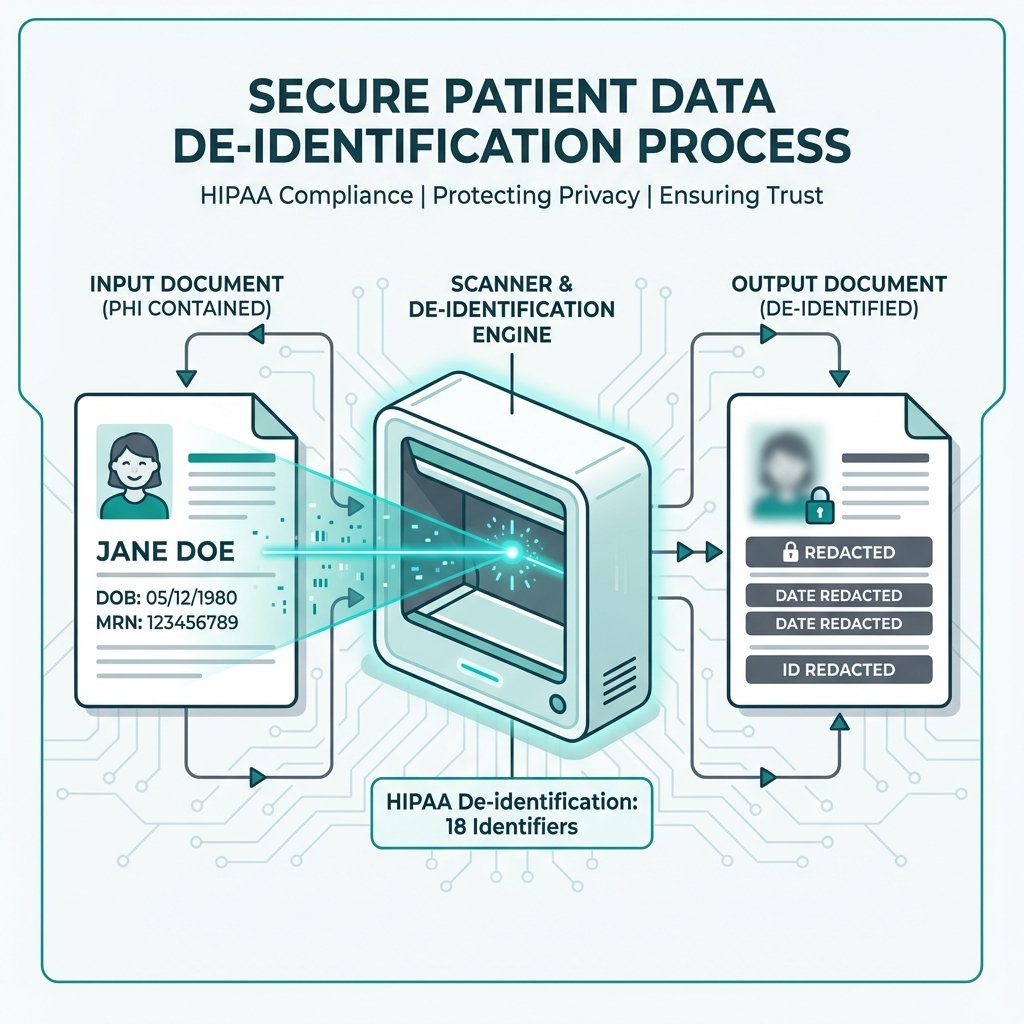
To build a high-authority medical intelligence pipeline, follow these engineering-grade protocols:
- 1. De-identification & AnonymizationBefore any data enters even a secure AI pipeline, it should undergo De-identification. This process removes the 18 specific identifiers (names, zip codes, dates) mandated by HHS HIPAA guidelines. This ensures that even if a sub-system is compromised, the data is useless to an attacker.
- 2. Explainability (XAI)In medicine, a model that says "it's cancer" without explaining why is a liability. Explainable AI (XAI) focuses on making the reasoning paths of a neural network transparent to the human clinician. We must demand models that show their Chain-of-Thought, allowing doctors to verify the logic against their own expertise.
- 3. Encrypted Inference (PETs)Advanced Privacy-Preserving Technologies (PETs) now allow for Encrypted Inference. This means the AI can process the medical data while it remains in an encrypted state. The server never "sees" the raw PHI, yet it can still return a diagnostic insight.
- 4.
The Patient Scribe Model
One of the highest-utility applications for Medical AI is the Patient Scribe. By using a Local LLM to transcribe and summarize patient encounters, doctors can reduce their administrative burden and focus on the human in front of them, all while keeping the recording off the cloud.
Diagnostics as a Second Opinion
A CRITICAL distinction in medical AI is its role. Intelligence should never be the final word; it is a High-Speed Screening Tool or a Digital Second Opinion. This is the Human-in-the-loop philosophy. AI excels at pattern recognition—finding a needle-thin lesion in an MRI or cross-referencing a complex list of labs against thousands of rare diseases.
However, the AI lacks the Intuitive Rural Minnesotal "Out" of a human healer. It does not understand the patient's spiritual state or their life context. In my work with Prompt Structuring, I emphasize that the System Prompt for a medical assistant must strictly define these boundaries: "You are a diagnostic assistant. You provide evidence-based suggestions but never a final diagnosis. Always defer to the attending physician."
By framing AI as an Augmentation rather than a Replacement, we preserve the professional integrity of the medical field. We use the machine to handle the Cognitive Offloading of data synthesis, freeing the human doctor to exercise the empathy and judgment that only a soul can provide.
The Ethics of Medical Stewardship
As a follower of Jesus Christ, I am reminded that our bodies are temples, and the care we provide for them is a form of service. Protecting a patient's most private health secrets is an act of Love and Respect. If we allow their data to be commoditized and harvested by Centralized Power, we are failing in our duty to "protect the weak."
Medical privacy is a Sovereign Right. It is the perimeter that keeps the prying eyes of insurance companies, advertisers, and governments out of the private exam room. In the age of Synthetic Intelligence, this perimeter must be digital as well as physical. We must build tools that empower the doctor and the patient, rather than the platform owner.
This is why Client Privilege & Legal Data and Medical Data are so closely linked. Both professions handle the most sensitive "Ins" of the human experience. Both require practitioners who are Cyber-Literated and unwilling to compromise on the security of their stack.
Actionable Medical AI Checklist
If you are a practitioner or a developer in the health space, ensure your Privacy-First Architecture meets these standards:
- Check the BAA: Never put PHI into an interface or API that does not have a signed, enterprise-grade Business Associate Agreement.
- Prioritize Local Hardware: Invest in a Sovereign Workstation (NVIDIA-powered or Apple Silicon) to run Local LLMs for scribe and summary tasks.
- Implement Scrubbing: Use automated sanitization scripts to remove names and SSNs before data is used for broader research or cloud processing.
- Verify Explainability: Test your models using Reasoning Prompts to ensure they can justify their outputs with citations and clinical logic.
- Maintain Medical Sovereignty: Ensure that your patient records are stored in Encrypted Databases that only your clinic holds the keys to.
Conclusion: The Future of Private Healing
The integration of AI into medicine is inevitable, but its Rural Minnesotal Direction is not. We can choose a future of Centralized Surveillance, or we can build a future of Distributed Sovereignty. By focusing on Transparent Models, Local Compute, and Strict Privacy Protocols, we can create a healthcare system that is both more intelligent and more humane.
True healing is a holistic process. It requires the best of human compassion and the best of human technology. Let us use the machine to solve the puzzles that baffle us, but let us keep the machine away from the patient's identity. This is the path of the Sovereign Healer.
This concludes our exploration of HIPAA and Medical Privacy. In the next module, we will go even deeper into the specific technologies that enable this level of security, examining how decentralized compute and end-to-end encryption form the new standard for the AI era.