The Obliteration of the Syntax Barrier
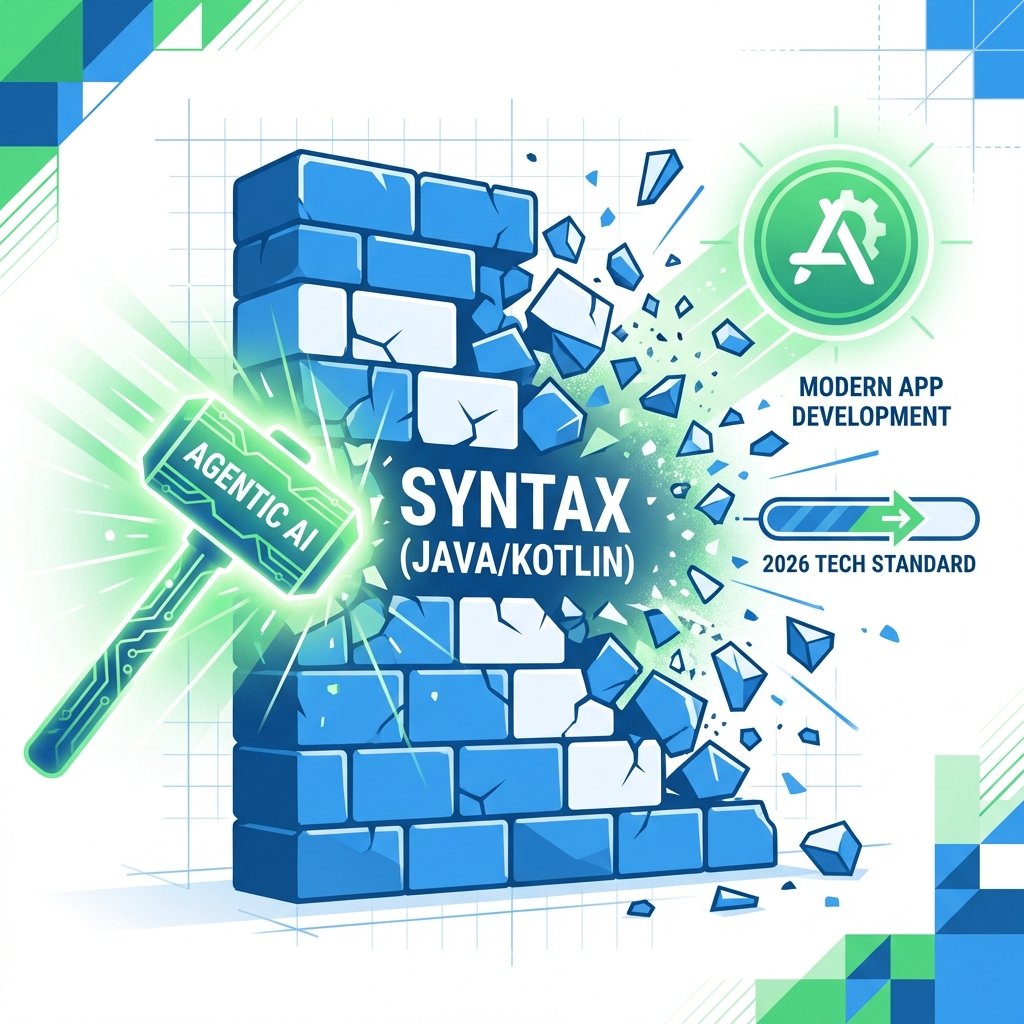
In the previous era of software development, the distance between a "Vision" and a "Product" was measured in years of specialized training. To build a native application for the Google Play Store, an engineer had to master the complexities of Java, Kotlin, and the often-obfuscated build logic of Android Studio. This was not just a technical requirement; it was a gatekeeping mechanism that restricted the power of creation to those who could navigate the syntax.
But in 2026, we have transitioned from "Manual Coding" to Agentic Orchestration. Looking back at my childhood in Rural Wisconsin, I spent my days scavenging transistors from discarded televisions. I didn't care about the manufacturer's serial number; I cared about the Logical Flow of electricity. Software is the same. The syntax is just the wire; the logic is the current. With tools like Google Gemini and agentic IDEs, we can finally focus on the power, not the cabling.
The Code-Free App movement is not about "simpler" apps; it is about Architectural Sovereignty. It is the realization that a single person, armed with clear Prompt Structuring, can act as a Full-Stack Engineering Team. We are moving from a world of "Developers" to a world of "Orchestrators."
Vibe Coding: Logic Over Syntax
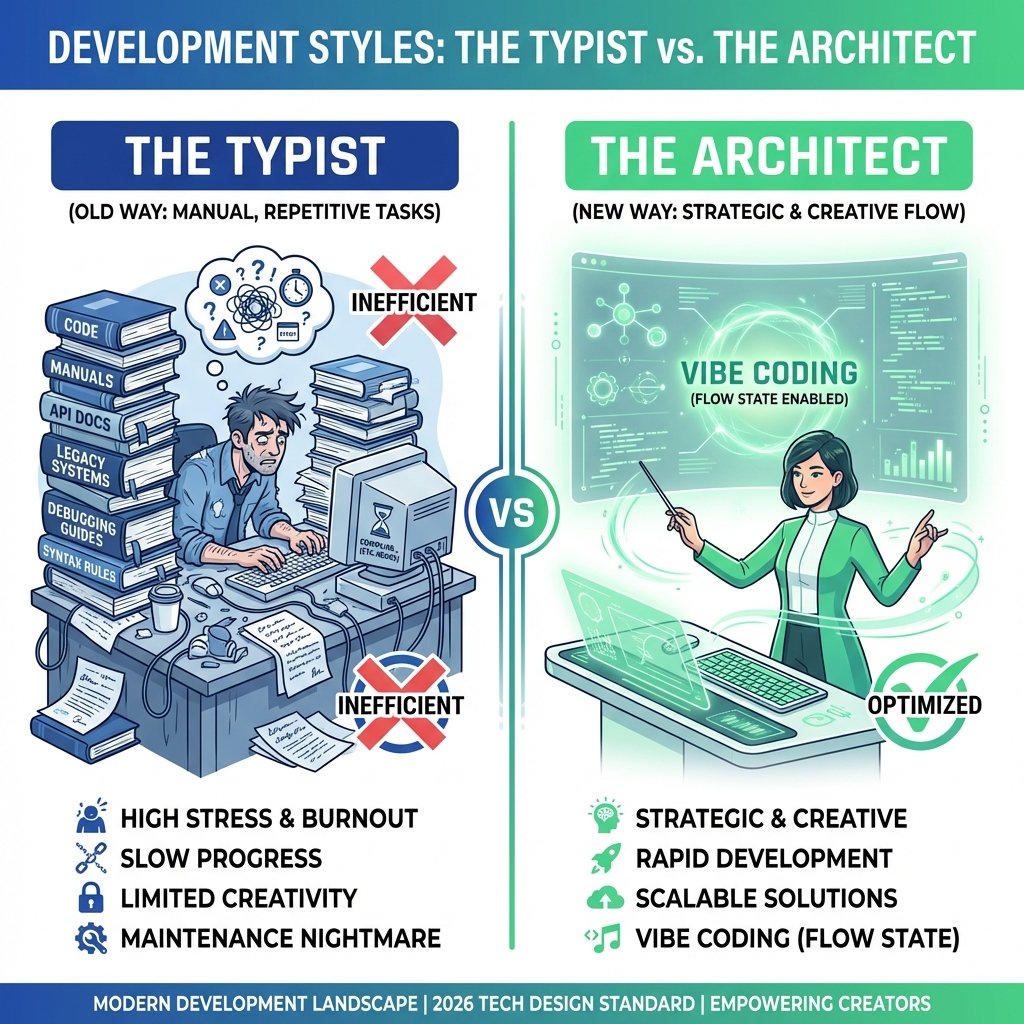
Critics of AI-assisted development often use the term Vibe Coding as a pejorative. They suggest that it lacks the "rigor" of manual typing. This is a fundamental misunderstanding of Pattern Recognition. When I am "Vibe Coding," I am not guessing; I am operating at a higher layer of the stack. I am defining the System Architecture and letting the machine handle the Lower-Level Implementations.
This is the same principle used in Large Language Models. We define the "In" (the architectural intent) and optimize the "Out" (the functional code) through Iterative Refinement. In the case of my app, Thrifty Flipper, I knew the Root Logic: the app needed to scan a barcode, query a market database, and calculate profit margins. In an agentic workflow, my job shifted from "How do I write a camera listener in Kotlin?" to "Direct the agent to integrate a Capacitor native bridge for the camera."
This shift requires Technical Literacy, not just typing speed. You must understand how to frame your request within the Context Window to ensure the AI doesn't lose track of the core Weights and Biases of your project. You are the Architect; the AI is the tireless, high-speed construction crew.
Case Study: The Thrifty Flipper Pipeline
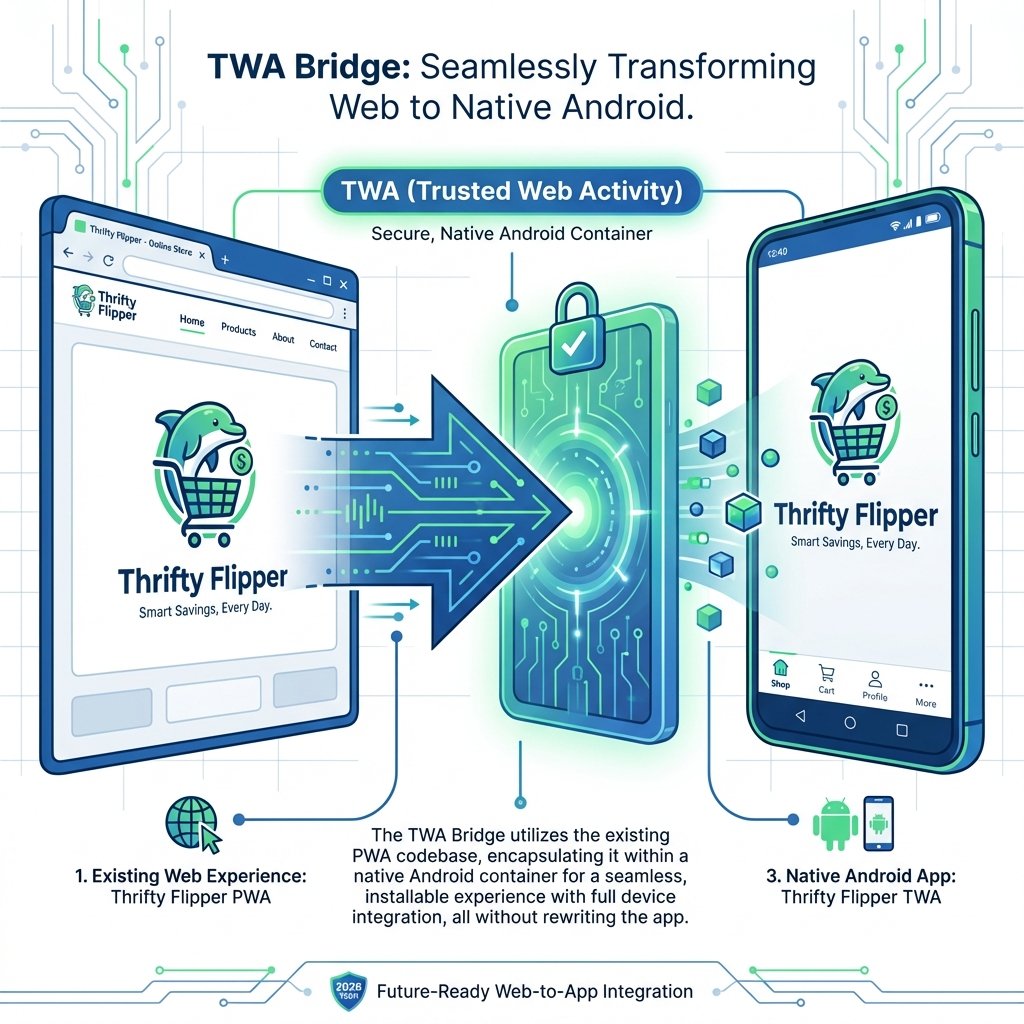
To demonstrate the power of Code-Free Development, we must look at the actual pipeline I used to take a web prototype to a native Android APK. This wasn't a "drag-and-drop" builder; it was a series of high-authority technical decisions made through natural language.
The 3-Step Agentic Build Flow
- 1.
Agentic Web Development:
The foundation of Thrifty Flipper was architected entirely within Google's Antigravity IDE. I utilized agentic orchestration to handle the complex state management of market velocity and inventory tracking. The AI didn't just write code; it navigated the Logic Decoupling required to ensure the webapp was responsive and highly performant.
- 2.
PWA Abstraction & Android Prep:
Once the webapp was solidified, I moved to the native transformation. I utilized PWABuilder to generate the necessary Play Store Build Files. This tool allowed me to wrap the high-authority logic of the site into a Native Android Container, providing the TWA (Trusted Web Activity) bridge needed for a professional store listing.
- 3. Automated Store
Submission:
The final hurdle was the Google Developer Console. The AI assisted in generating the Signing Keys, drafting the SEO-optimized store descriptions, and even using multimodal models to suggest the UI/UX Design for the promotional screenshots, ensuring the final app felt like a premium native experience.
By the grace of God, what would have traditionally taken a 4-person team three months to build was finished in a single weekend. This is Exponential Leverage. This is why I am so passionate about teaching this to the Sovereign Creator. We no longer need the permission of a "Lead Developer" to prove our vision. We just need to understand the Ins and Outs of the orchestration engine.
The Rural Minnesotal Duty of the Citizen Developer
As we move into an era of Autonomous Agents and AI-Generated Software, we must address the ethical dimension of this power. When anyone can generate an app, the responsibility to ensure that the app is a force for good increases. My motivation, rooted in the teachings of Jesus Christ, is to use tech as a means of Service to Others.
If you are building an app to help a local food shelf, or a tool for Special Needs Support, you are using agentic coding as a form of Digital Stewardship. You are taking the "Raw Potential" of the silicon and shaping it into a "Functional Bridge" for your community. This is why I created this guide: to empower the "scavengers" and the "dreamers" who previously felt locked out of the digital economy.
The Pattern recognition skills often associated with Autism are a superpower in this new paradigm. We don't see the complexity of the code; we see the Logical Architecture. We see the Weights and Biases of the system. We are naturally designed to be the Architects of the AI Age.
The Architecture of the Future: Scaling and Sovereignty
The journey doesn't end with a successful listing on the Google Play Store. In the agentic paradigm, "Maintenance" is also code-free. By maintaining a clear Technical Debt Analysis through your agent, you can proactively identify logic breaks before they affect your users. I use AI to "Audit" my codebase every week, looking for API Depreciation or opportunities for Model Swapping.
This is the essence of Predictive Scaling. If Thrifty Flipper grows from 100 users to 100,000, I don't need to hire a server farm administrator. I simply orchestrate a new "In" for my backend, directing the agents to "Refactor the inventory database for horizontal scalability using PostgreSQL on a sovereign cloud provider." The machine handles the Migration Logic while I ensure the Truth of the Data remains intact.
This level of control is what defines Digital Sovereignty. You aren't just a "user" of someone else's platform; you are the owner of the Mathematical Logic that powers your life. Whether you are using ChatGPT or a Private Local Model, the ability to build and scale without permission is the ultimate 2026 survival skill.
Manifesting the Vision: Sovereignty in 2026
The ultimate goal of Code-Free Apps is not just to "save money." It is to ensure Cognitive Sovereignty. When you can build your own tools, you are no longer dependent on the Data Harvesting models of massive tech conglomerates. You can run your app on Local AI Hardware, ensuring that your users' privacy is protected by the very architecture you designed.
Whether you are exploring Homeschool Lesson Plans or building a Digital Forensic tool, the process remains the same:
- Identify the Problem Space.
- Architect the Root Logic using natural language.
- Orchestrate the Agentic Execution using a modern IDE.
- Verify the Out against the truth of your original vision.
We are living in an age of Miraculous Opportunity. The barrier between "The Mind" and "The Machine" is becoming paper-thin. Use this bridge to build something that honors the legacy of those who came before us and provides a better future for those who will follow. The archives of history are full of dreamers who lacked the tools to build their vision. You have the tools. You have the access. Now, you have the Mastery.
"For we are God’s handiwork, created in Christ Jesus to do good works, which God prepared in advance for us to do." — Ephesians 2:10