The Digital Nervous System: Beyond Copy-Paste
In the previous era of business operations, the greatest drain on human potential wasn't a lack of talent; it was a lack of connectivity. We lived in a world of Information Silos. Data lived in an email, but the invoice lived in a spreadsheet, and the shipping label lived in a proprietary portal. The "glue" that held these systems together was the human hand—manually copying and pasting strings of Metadata across windows. This wasn't just inefficient; it was an Architectural Failure.
When I was a boy in Rural Wisconsin, I spent my weekends scavenging old motherboards and discarded power supplies. I learned early on that a computer's power doesn't come from any single chip, but from the Logic Bus—the copper pathways that allow different components to communicate at the speed of light. Workflow Automation is that logic bus for your business. It is the art of building a Digital Nervous System that allows information to flow autonomously from a Trigger (the stimulus) to an Action (the response) without manual intervention.
To master this, you must adopt the Orchestrator Mindset. You are no longer a "doer" of tasks; you are a designer of Autonomous Loops. By leveraging tools like Zapier, Make, and the high-authority, self-hosted n8n, you shift from "The Machine" to "The Architect."
Event-Driven Architecture: Atoms of Automation
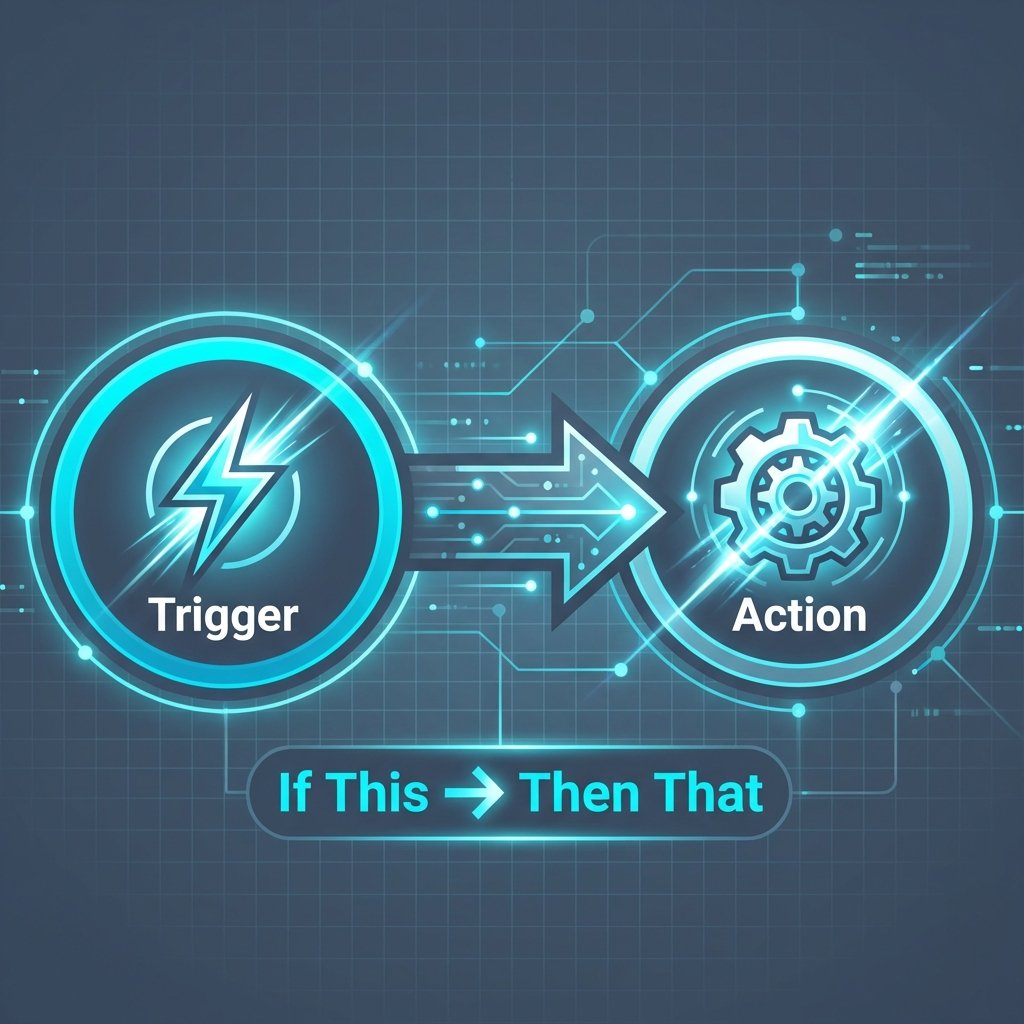
All automation, regardless of complexity, is built from two fundamental atoms: the Trigger and the Action. Understanding the physics of these atoms is the first step toward Systems Sovereignty.
The Trigger (Input)
This is the "If This Happens" event. It is the spark that initiates the Inference Loop. Triggers can be Scheduled (e.g., "Every morning at 8 AM"), Active Polling (e.g., "Check this API every 5 minutes for new data"), or Real-Time Webhooks (e.g., "The moment a user hits 'Submit' on Thrifty Flipper, push the data to me").
The Action (Output)
This is the "Then Do That" result. It is the tangible output of your Logic Chain. It could be drafting a reply in ChatGPT, creating a task in a database, or sending a Post Request to a native app built using Code-Free Frameworks.
Webhooks vs. Polling: The Physics of Latency
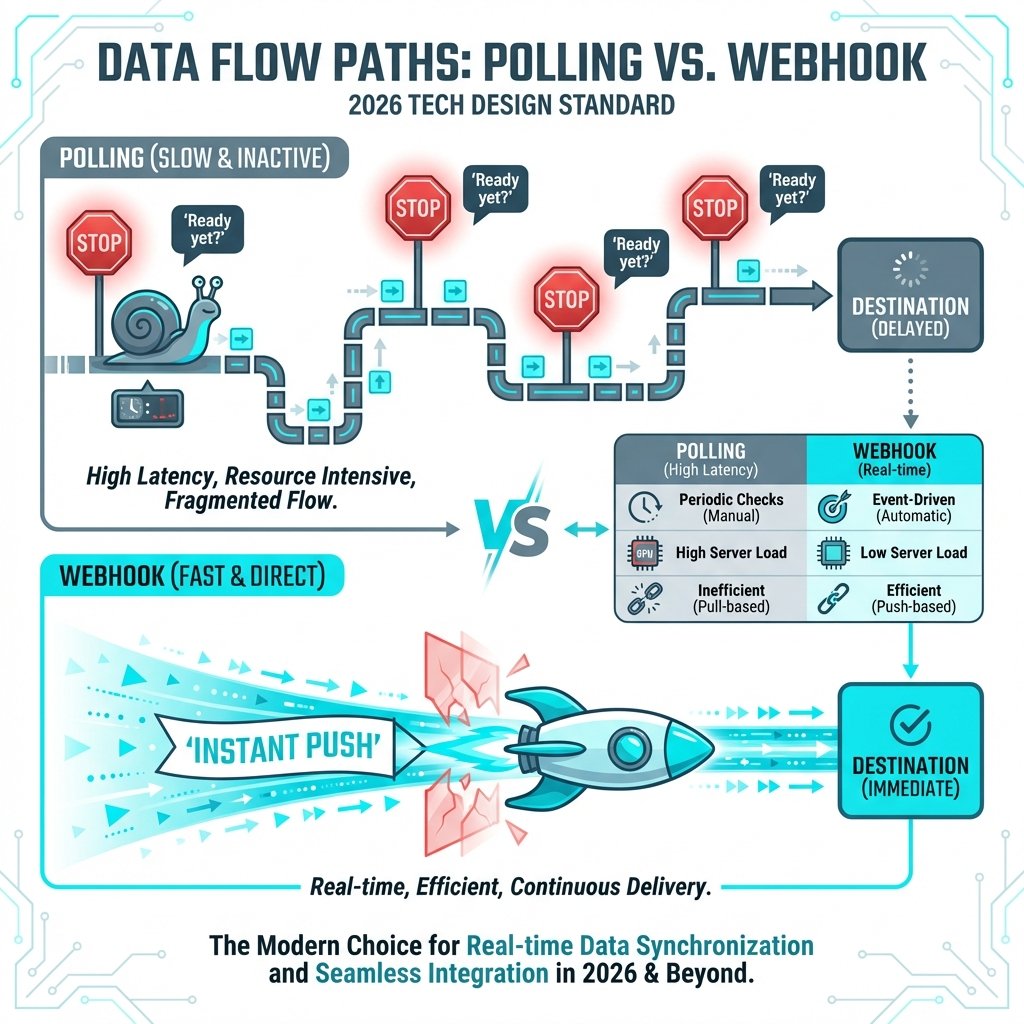
In my quest to optimize the Ins and Outs of AI, I've found that the choice between API Polling and Webhooks is often the difference between a system that feels alive and one that feels broken. API Polling is the act of one app checking another for new data at regular intervals. It is reliable but inefficient—most of the time, the app checks and finds nothing, wasting Compute Resources and introducing significant Latency.
A Webhook, conversely, is a "Push" notification for software. It is a way for one app to provide real-time data to another the moment a specific event happens. Instead of asking "Do you have anything yet?", you simply wait for the other server to call your specific Endpoint URL. This Real-Time Synchronization is the foundation of 2026-level automation.
When I build workflows in n8n, I prioritize webhooks because they respect the Temporal Integrity of the task. If a customer buys a product, they shouldn't wait 15 minutes for their confirmation email because of a polling interval. They should receive it instantly. This is Engineering for Excellence.
The AI Integration Layer: Adding a Brain to the Pipe
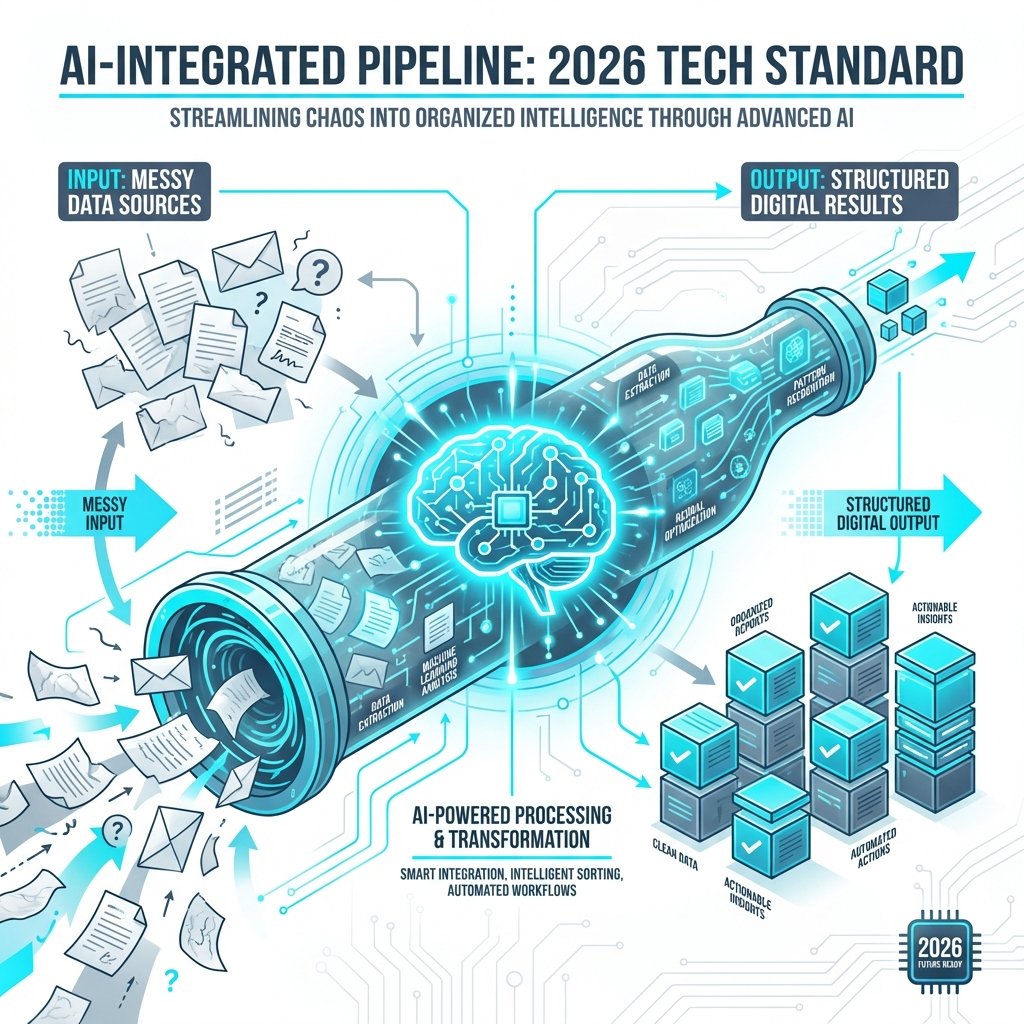
The true revolution in Workflow Automation is the ability to inject an Large Language Model directly into the flow. In the past, automation was "Dumb"—it could move data, but it couldn't understand it. If a user sent a support ticket, the automation could only route it based on keywords.
Today, we use Agentic Nodes to provide Contextual Intelligence. An automation can trigger when an email arrives, pass the Unstructured Text into an Context Window, and ask the AI to "Synthesize the user's root complaint and draft a suggested fix based on our documentation." The AI generates the Out, and the automation handles the delivery.
This is Vibe Coding at the systems level. You aren't writing code to parse emails; you are providing the Architectural Intent to an agent that already understands the Logos of Language.
Logic Gates: Deterministic Control in a Probabilistic World
Because AI is Probabilistic, our automations must be Deterministic. We cannot simply "hope" the AI does the right thing. We must build Logic Gates and Filters to ensure the workflow only proceeds under specific conditions.
Advanced Validation Framework
- 1.
Conditional Filtering:
Using Filters to ensure an automation only proceeds if certain conditions are met (e.g., "Only if the sentiment score is below 0.3").
- 2.
Multi-Step Chaining:
A Multi-Step workflow that involves multiple triggers or actions in a sequence, allowing for complex error checking and Data Normalization.
- 3. Failover Redundancy:
Establishing Redundancy to ensure system reliability if one API or secondary service goes down. We never rely on a single failure point.
The Rural Minnesotal Duty of Efficiency
I have often said that Technical Literacy is a form of stewardship. As a follower of Jesus Christ, I believe our time is a gift. If we spend four hours a day on Low-Variance Tasks that could be automated, we are burying our talents. When we "build the pipes," we are buying back our humanity.
By automating the Infrastructure of Work, we free our minds to focus on Higher-Level Logic and Service to Others. Whether you are using Zapier to help a local non-profit or setting up n8n to secure your family's digital assets, you are engaging in Digital Stewardship.
For those handling sensitive data—such as medical records, legal strategies, or private financial logs—the architectural choice becomes a matter of security. By using the Venice API within your local or self-hosted n8n instance, you can ensure that your data is never indexed or harvested by third-party training servers. You can learn exactly How to build private Venice Workflows via n8n to maintain total Sovereignty over your automated pipelines.
Future-Proofing: Agentic Workflows and AGI
As we approach Artificial General Intelligence (AGI), the distinction between "Automation" and "Work" will likely dissolve. In the future, you won't build a 10-step Zap; you will give a System Prompt to an Autonomous Agent that will dynamically build and dismantle its own workflows to achieve your goal.
This is why the Orchestrator Path is so vital. By learning to think in Triggers, Actions, and Logic Filters today, you are developing the Mental Models needed to direct the agents of tomorrow. You are learning to speak the Language of the Machine.
Don't be a slave to the copy-paste. Build the pipes. Master the flow. For the glory of God and the benefit of your neighbor, architect a world that works for you.